Fascinating!
Monday, October 10, 2011


Monday, August 29, 2011
Avoid Emotional Triggers in Chapter Relations

I have written an article, Avoid Emotional Triggers in Chapter Relations, for ASAE's Component Relations E-Newsletter. It presents a list of emotional triggers (i.e., behaviors by headquarters' staff) that can frustrate chapter leaders.
And this raises the question: How does one respond when emotionally triggered? Here are two approaches toward speaking skillfully in such a situation:


Using these techniques, and training your volunteers to use them, can significantly reduce tension and conflict between an association's HQ and its chapters.
'nuff said!
Click here for more articles about Chapter Relations.
Friday, August 26, 2011
A Decision Making Primer
Is your board having trouble making decisions? Here are some questions to ask yourself.
.
Decision Making Workshop: Help for the board, committee or staff team needing to improve its decision making abilities.
Wednesday, August 24, 2011
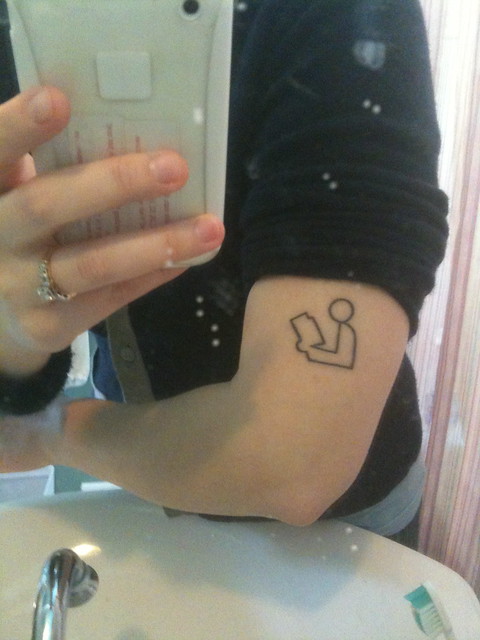
More Tattoos: How are Your Members Branding Themselves?
In the previous post, I ruminated about tattoos. Well, there's a cool project called, Brand Yourself a Librarian. Check it out! Now take a look at the pics and the video and ask yourself, "How are my members branding themselves?"

Sunday, August 14, 2011
Member Tattoos: Your Association Logo Here!
Tattoos! Yes, tattoos! They signify loyalty, commitment and pride. Consider the two examples below. The first being someone who is a PBS devotee. The second...well, this dude is a Harley owner and he's tattooed a portrait of the founders of Harley on his back!


With that in mind, here's my question: Do your members love your association enough to get a tattoo? Of course the question isn't really about tattoos, it is about loyalty, commitment, passion and a deep sense of community.

Tuesday, August 2, 2011
The Case of the Members Who Griped but Just Wanted to Help
It's inevitable, we get negative feedback from our volunteers. Staff hears the complaints, they get annoyed as they try to placate the complainer(s). In other words, they respond to the complaints by assuming the worst: 1) that a majority of volunteers feel the same way; or 2) if a volunteer is griping, (s)he probably has nothing positive to offer.
Let us consider two cases where that assumption was seriously misleading...
The Case of the Appreciative but Silent Volunteers:
In recent years, this association had been barraged with complaints from the Chairs of its special interest committees. In response, the staff made a systematic and concerted effort to make needed improvements. However, there wasn't much in the way of positive feedback from the Chairs. The staff assumed the volunteers were either unaware, unappreciative or just impossible to please.
In recent years, this association had been barraged with complaints from the Chairs of its special interest committees. In response, the staff made a systematic and concerted effort to make needed improvements. However, there wasn't much in the way of positive feedback from the Chairs. The staff assumed the volunteers were either unaware, unappreciative or just impossible to please.
Guess what? The staff was wrong. When I conducted phone interviews with the Chairs, a very different picture emerged. Many of the Chairs were aware and appreciative of the improvements. They had many positive comments about staff performance. Aha! The phone interviews gave them the chance to provide feedback.This reassured staff that they were on the right track and confirmed that staff and volunteers were in sync about what next steps were needed.
The Case of the Commercial Members Who Griped but Just Wanted to Help:
For this association, the problem was a continual set of gripes from a core of their Commercial Members (these were folks who were long time members and, therefore, were deeply involved). Once again, a set of phone interviews revealed a more hopeful picture. The CMs, who sold to the association's institutional members, wanted a greater sense of inclusion as part of the professional community but felt left out.
For this association, the problem was a continual set of gripes from a core of their Commercial Members (these were folks who were long time members and, therefore, were deeply involved). Once again, a set of phone interviews revealed a more hopeful picture. The CMs, who sold to the association's institutional members, wanted a greater sense of inclusion as part of the professional community but felt left out.
Guess what? When I spoke to the executives of these institutions their outlook was: "We know there is a core of CMs who have made a great contribution to the profession and the association. We are concerned because the association has failed to recognize that adequately." As a result, a task group of CMs and institutional members was convened to improve the relationship.Volunteers who had been gripers were now problem solvers.
It's probably an immutable law: there will always be complaints and negative feedback from volunteers. After all, you can't please all the volunteers all the time! The best, most professional way to respond to griping is to:
- Gather the facts, find out what the majority of volunteers really think and feel (i.e., don't assume the complainers represent the majority)
- Report your findings back to the volunteers so everyone is on the same page.
- Ask for help. Tell your volunteers you want to improve things and request their help (e.g., a volunteer task force).
- Deliver!
The Bottom-Line: Don't assume the worst when you hear a complaint from a volunteer. It doesn't do any good for your morale or the morale of the rest of your staff. Get the facts and stick to what you should be doing in the first place: strategies and activities that benefit the member and engage the volunteer.
Saturday, July 30, 2011
The Two Questions You Must Ask of a Volunteer
In an previous post, Get In Sync with Your Volunteers, I presented a series of question that staff and volunteers should explore together to promote a greater harmony and a higher level of collaborative performance. In this post, I propose two questions I believe staff must ask of volunteer.
"What are the two or three most important
things you want me to know about you so
I can help you succeed as a volunteer?"
"What are the biggest questions or concerns
on your mind that need to be addressed
by me or someone else on staff?"
Asking these questions at the beginning of the staff-volunteer relationship puts into place two building blocks necessary for a trust-based partnership. You will notice the first question is about what the volunteer thinks (s)he needs to succeed, thereby laying the groundwork for a "win-win" relationship.
The second question demonstrates concern and empathy for the volunteer (who is likely to have some doubts about his or her ability to do a good job). In the course of numerous interviews with volunteers, from many different associations, the refrain I often hear goes something like this, "I just don't want to screw up during my tenure as Chair." In other words, most every volunteer feels a bit insecure about their role, it's only natural. The second question provides staff with the insights they need to reassure and support the volunteer.
Thursday, July 28, 2011
Trust and Keeping Promises
Yesterday, I hosted a meeting of Chapter Relations Professionals on the topic of building trust with chapters. One of the participants noted the following pattern that occurred at her old association:
The HQ would roll out a new program or service for their chapters which was well received. However, the HQ would then often decide, a couple of years later, that they would no longer be able to offer the program. Naturally, the chapters became distrustful when, at a later date, the association rolled out new programs. The chapters were unwilling to commit their time and energy to the new programs for fear they would be discontinued in the near future. Who could blame them?
All of this reminded me of a quote I read in the book Performance Management by Aubrey C. Daniels:
"Trust is measured behaviorally by the correlation between antecedents and consequences. In other words, those who always do what they say are trusted; those who do no are not trusted...An unkept promise by a manager causes the person not only to distrust the manager but the company as well."
The Bottom-Line: Every time an association rolls out a new program or service - be it for its chapters or its members - it is making a promise. To keep that promise, the association needs to be committed to the program over the long haul.
'nuff said!
Subscribe to:
Posts (Atom)